Article
Customer Feedback Management Software: How Product Teams Centralize Customer Feedback
Compare customer feedback management software for product teams: spreadsheets, Productboard, Canny, Dovetail, Zendesk, NuHQ. See Nov 2026 pricing and fit.

Most product teams do not lack customer feedback. Instead, they lack one place where it lives. Feedback sits in Zendesk tickets, Gong call notes, Slack threads, sales CRM notes, and a product manager’s private docs. This post explains what customer feedback management software does, compares the main approaches with November 2026 pricing, and shows where NuHQ fits in.
Some teams think a feedback widget, or a spreadsheet one person keeps up to date, is enough. I’ve sat through more quarterly business reviews (QBRs) than I can count where the research team brought a 50-page pdf, support brought a readout of chatbot transcripts, a product manager brought results from the feedback widget, and a sales director brought an idea from one high-spend client. Each of them was surprised that everyone else had brought feedback too.
Then it takes another meeting to weigh all the options, and most people leave disappointed. The loudest person or the best debater wins, and no one knows how many customers the decision will truly help. Customers end up feeling like their input fell through the cracks – even when the data backed up their asks.
What does customer feedback management software do?
Customer feedback management software captures input from every channel, formats it for a single repository, and connects each piece of information to the customers and product decisions it relates to. The goal is traceability – from “a customer said this” to “we built this because of it.”
Generally, an effective customer feedback system performs five jobs:
- Intake. Pulls feedback from support, sales, success, research, and in-app sources without manual data entry.
- Attribution. Records who said what: the account, customer segment, plan, related revenue, and role.
- Organization. Tags and clusters feedback into core themes and opportunities, not just feature requests.
- Linking. Attaches feedback to the problems, decisions, and roadmap items it supports.
- Closing the loop. Tells customers and internal teams what happened to their input.
Why do product teams struggle to centralize customer feedback?
Product teams sometimes struggle with categorizing and organizing feedback. Often, feedback is generated by many teams across an organization, and in many tools, with no shared structure. Support tags tickets one way, sales logs “feature gaps” another way, and researchers keep interview notes in a third tool.
The results are as follows:
- The same request appears under five different names.
- Product managers can’t tell whether a theme comes from three customers or three hundred.
- Roadmap reviews focus on anecdotes, and whoever spoke to a customer last wins.
I once watched a sales director push through a feature that only one client had asked for. He skipped over the data collected from our feedback widget, chat support transcripts, and more, and almost no one used it.
Here’s a hypothetical example: a 40-person SaaS company has 2 product managers, 6 support agents, and 4 account executives. Support closes about 900 tickets a month, and roughly 10% of those tickets have feedback about the product. That’s 90 pieces of feedback a month from support alone, not including sales calls and interviews. Without a central system, most of it is never read by anyone on the product team.
What are the main ways to centralize customer feedback?
There are five common ways to centralize customer feedback:
- A shared spreadsheet
- A product management tool with feedback features (like Productboard)
- A feedback portal with voting (like Canny)
- A research repository (like Dovetail)
- Helpdesk tagging (like Zendesk).
NuHQ is a sixth option that treats feedback as connected customer evidence.
The table below compares each of these options. Pricing is as of November 2026 from public vendor pages and third-party pricing trackers. Confirm on each vendor’s pricing page before you buy.
| Approach | Best for | How feedback gets into the system | Links feedback to decisions and roadmap | Pricing (as of November 2026) |
|---|---|---|---|---|
| Spreadsheet (Google Sheets, Microsoft Excel) | Very early teams, under ~500 entries | Manual entry or forms | Manual, by convention only | Included in existing workspace licenses |
| Productboard | Product teams running feedback-driven roadmaps | Integrations, browser extension, email, Insights inbox | Yes, notes link to features via Insights | Request a demo and contact the sales team (pricing) |
| Canny | Public feedback boards, voting, and changelogs | Customer-submitted posts, widgets, integrations | Yes, posts link to roadmap and changelog | Free (25 tracked users); Pro from $79/month billed annually for 100 tracked users; Business custom (pricing) |
| Dovetail | UX research teams synthesizing interviews and qualitative data | Uploads, recordings, integrations | Partial, via insights and highlights | Free plan; paid tiers through sales (see vendor pricing page) |
| Zendesk ticket tagging | Support-led teams already living in Zendesk | Agents tag tickets | No, requires export and manual analysis | Support Team from $19 per agent/month; Suite Team from $55 per agent/month; and Professional $115 per agent/month billed annually (pricing) |
| NuHQ | Teams that want feedback connected to decisions, planning, delivery, and company knowledge | Central customer evidence across channels; take the NuHQ Products Tour | Yes, evidence links to decisions, plans, and delivery work | NuHQ Products plans start at $400/month (NuHQ pricing) |
When should you choose each approach?
Choose the option that matches where your customer feedback originates and who needs to act on it. While no single option is best for every team, several of these tools work well together.
- Choose a spreadsheet if you have one product manager, fewer than a few hundred items of feedback, and no budget.
- Choose a platform like Productboard if your product team wants a dedicated product management tool where feedback notes roll up into features and roadmaps.
- Choose Canny if you want customers to submit and vote on ideas publicly, and you value a built-in changelog to close the loop. Watch the tracked-user pricing as your audience grows.
- Choose Dovetail if your main source is qualitative research, including interviews, usability tests, and recordings. Its strength is deep synthesis of long-form data, not high-volume request tracking.
- Choose Zendesk tagging as an intake layer, not a destination for your customer feedback. Support sees the most feedback, so tagging in Zendesk can be valuable. Pair it with a central system so that the product team can make decisions and act on the tags.
- Choose NuHQ if your problem is that feedback, decisions, and delivery live in different tools, and the reasoning gets lost between them. NuHQ is built for teams that want one AI-native company headquarters, rather than another point solution.
How does NuHQ centralize customer feedback?
NuHQ centralizes customer feedback as customer evidence inside NuHQ Products, where it connects to the product decisions, plans, and delivery work it supports. Instead of a separate feedback silo, evidence sits next to the decision that informed it.
- One evidence layer. Feedback from customers, sales, and research lands in a single repository, linked to the accounts and revenue behind it.
- Evidence linked to decisions. When a team decides to build, defer, or reject an idea, the decision record cites the feedback behind it.
- Planning and delivery in the same place. Roadmap items carry their evidence through planning and into delivery, so engineers and executives see why work exists.
- Native AI, with transparency. AI is part of every capability in NuHQ, not an add-on. It flags duplicate requests and summarizes research with citations back to the source.
- Shared with the whole company. With NuHQ Knowledge, customer evidence can be visible to sales, success, and leadership, rather than locked inside a product tool.
How do you roll out centralized feedback without disrupting teams?
Roll out a customer feedback system in stages: agree on a tag taxonomy, connect your highest-volume source first, and then add channels one at a time.
- Audit sources. List every place your customer feedback lives today and estimate your monthly volume.
- Define a taxonomy. Keep it to 15-30 themes to start.
- Connect the biggest source. Usually, it’s from your support team. Get one channel flowing cleanly before adding more.
- Set a cadence for triage. This might be a weekly 30-minute review, owned by a named product manager, which helps keep the backlog under control.
- Close the loop. Tell customers and internal requesters when a decision is made, including the cases when you need to defer a decision.
What should you look for when evaluating customer feedback management software?
Evaluate software options based on traceability, coverage of intake, attribution, and who can see the evidence. Feature lists matter less than whether you can answer “why are we building this?” in under a minute.
As you take demos, use this checklist:
- Can I trace an item on the roadmap back to the exact quotes and customer input behind it?
- Does the platform pull from the tools my support, sales, and research teams already use?
- Can I segment feedback by plan, revenue, and customer type?
- Who can view the evidence, and what does each seat cost?
- What does AI usage cost, and how is it metered?
- How does the vendor explain its AI, and can I review its summaries against source data?
Key takeaways
- Customer feedback management software centralizes input from every channel, tags it, and links it to product decisions.
- Spreadsheets and Zendesk tags are fine starting points, but they do not provide traceability on their own.
- Productboard, Canny, and Dovetail each fit a specific job: feedback-driven roadmaps, public voting, and research synthesis.
- NuHQ connects customer evidence to decisions, planning, and delivery in one AI-native company headquarters.
- Assess tools by asking one question: can anyone see why a roadmap item exists in under a minute?
If your feedback, decisions, and roadmap still live in separate tools, see how they connect in one place. Take the NuHQ Products tour to see how it works.
Put this into practice with NuHQ Products
Product work linked to the decisions and knowledge behind it. The beta is opening to teams in waves.
Frequently asked questions
What is customer feedback management software?
Customer feedback management software is a system that collects feedback from every channel (like support tickets, sales calls, interviews, surveys, and community posts), stores it in one searchable place, tags it by theme and customer, and links it to the product decisions it informs. Tools range from voting boards like Canny to research repositories like Dovetail to connected platforms like NuHQ.
Can I centralize customer feedback in a spreadsheet?
Yes – and many teams start there. A shared Google Sheets or Microsoft Excel file works for a few hundred entries and one or two product managers. However, it breaks down when volume grows, when several teams add tags inconsistently, and when you need to trace a roadmap item back to the specific customers who asked for it. That is usually the right time to implement dedicated software.
Is Zendesk tagging enough for product feedback?
Zendesk ticket tags can be effective, because support sees the most feedback. Keep in mind that tags live on tickets, not on product opportunities. So, product managers still have to export, de-dupe, and interpret them. Zendesk works best as one source feeding a central feedback system, rather than as the whole system.
How is NuHQ different from Canny or Productboard for feedback?
Canny focuses on public feedback boards and voting, whereas Productboard focuses on feedback-driven product management for product teams. NuHQ treats feedback as customer evidence inside a more comprehensive company headquarters, connecting it to product decisions, planning, delivery, and company knowledge – the reasoning behind a roadmap item stays visible to everyone, not just the product team.
How much does customer feedback management software cost?
As of November 2026, pricing models vary. Canny and Dovetail offer free plans, Canny Pro starts at $79 per month billed annually, Zendesk charges per agent, and Productboard prices through its sales team. Always confirm current figures on each vendor’s pricing page before budgeting for your organization.
Sources
Written by
LinkedIn profileRelated reading
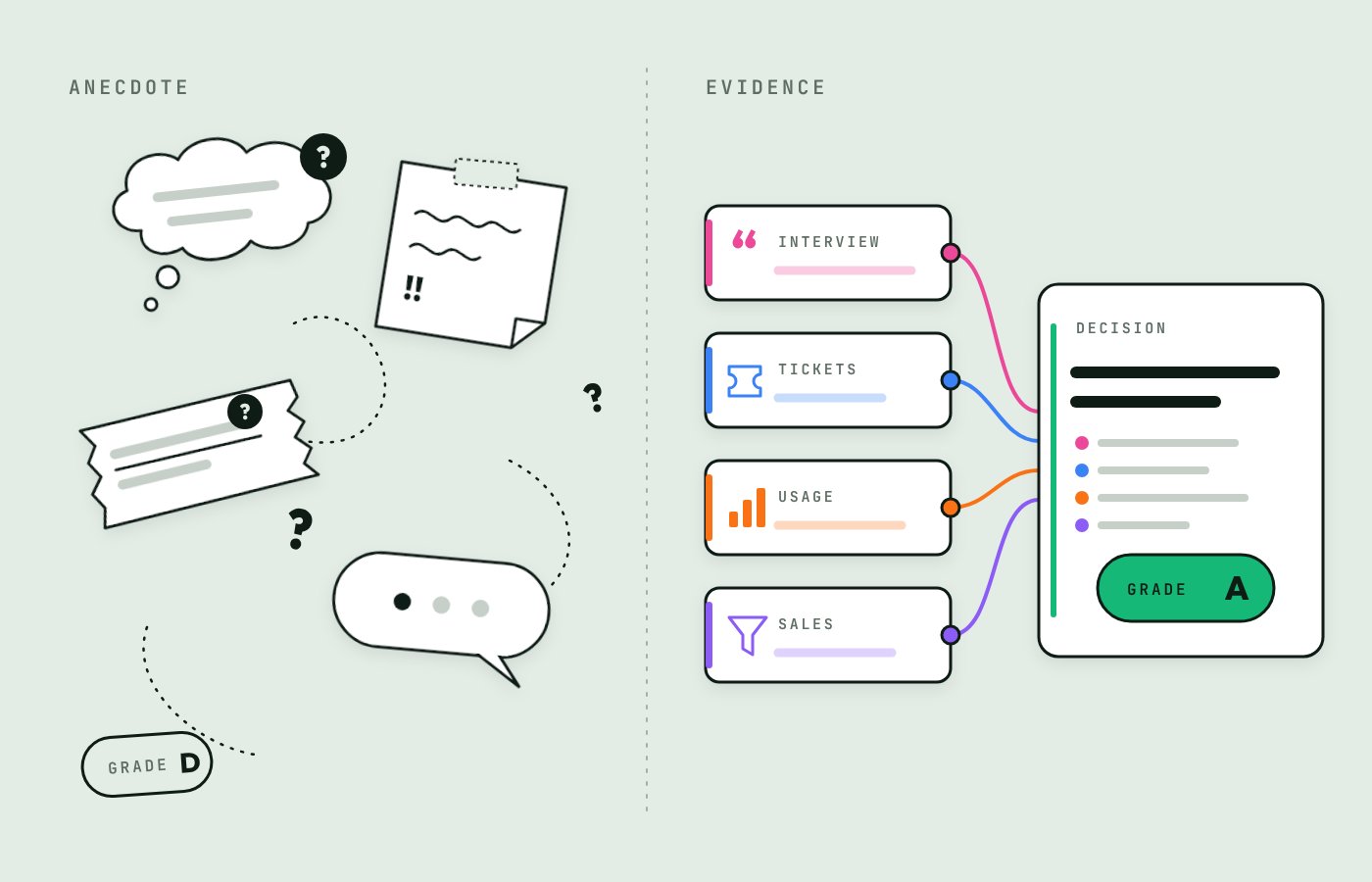
Customer Evidence: What It Is and How to Use It in Product Management
Customer evidence is traceable proof from real customers behind product decisions. Learn the types, how to grade it, and how to put it to work.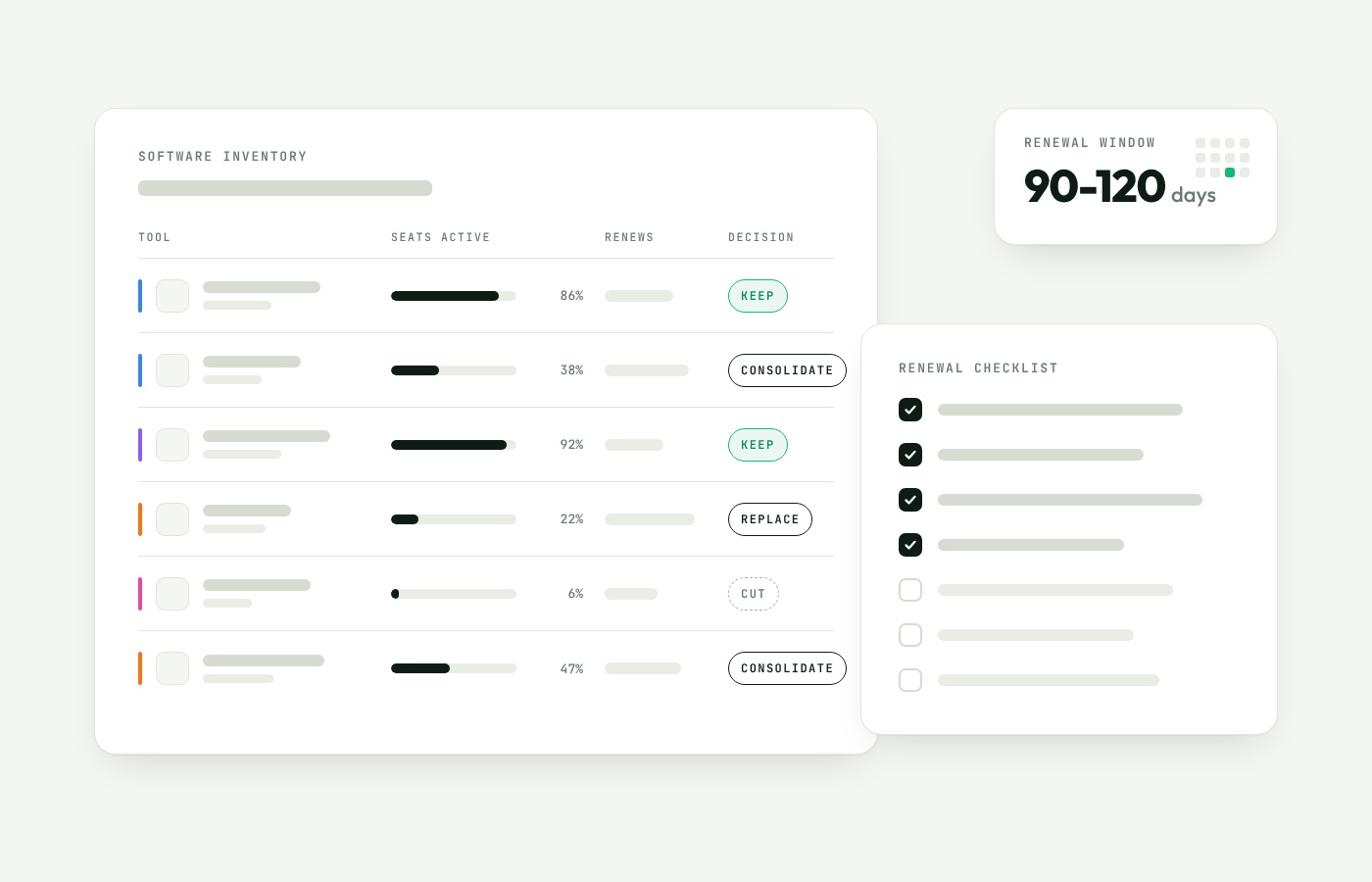
How to Audit Your Software Stack (Before Your Next Renewal)
A practical guide to auditing your software stack: build an inventory, find overlap and unused seats, check true costs, and plan renewals. Checklist inside.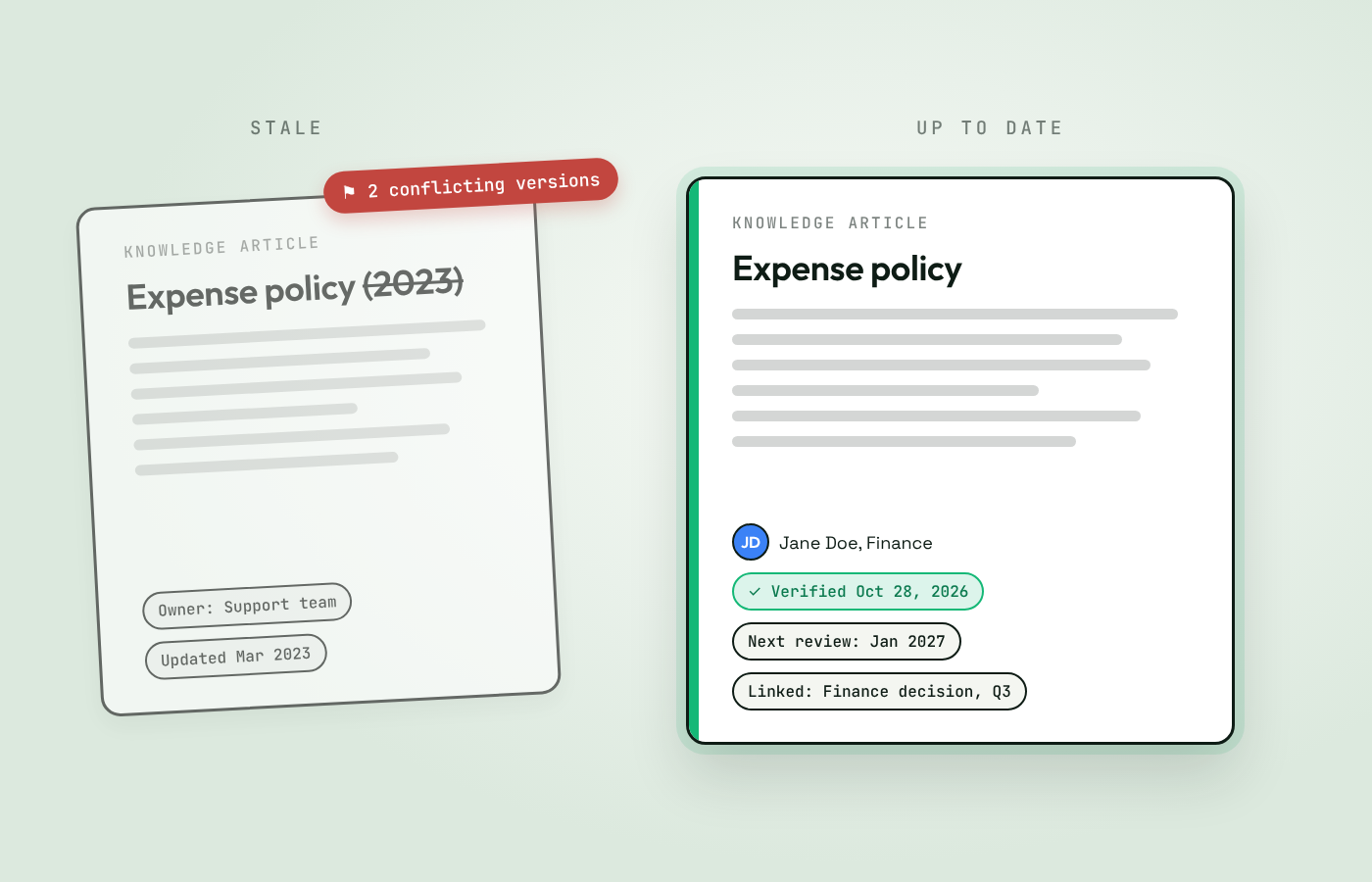
How to Keep Your Knowledge Base Up to Date (and Stop It From Going Stale)
Knowledge bases go stale fast. How to keep yours up to date with owners, review dates, updates in the flow of work, and signals that flag outdated content.


